
Managed IT support in London is the ongoing, proactive monitoring and maintenance of your business technology by a dedicated partner. It reduces downtime, improves security, and keeps systems updated. From Unit 23, Concepto Solutions delivers 24/7 UK-based helpdesk and onsite response, integrating networks, security, and smart systems for reliable operations across London.
By Concepto Solutions • Last updated: 2026-05-19
Overview & Table of Contents
This complete guide explains what managed IT support is, why London organizations benefit from it, how a managed service operates day to day, the service types to consider, and best practices to cut downtime. It includes a comparison table, practical tools, Unit 23 local considerations, and real examples from Concepto Solutions.
Whether you run a multi-site retailer, a boutique hospitality venue, or a high-end residential property, the goal is the same: stable networks, tight security, and fast support. Use this outline to jump to what you need.
- What Is Managed IT Support?
- Why Managed Support Matters in London
- How Managed IT Support Works
- Types of Managed Services
- Best Practices for London SMEs
- Tools & Resources
- Case Studies & Examples
- FAQ
- Conclusion & Next Steps
What Is Managed IT Support?
Managed IT support is an ongoing service where a specialist team monitors, maintains, and improves your technology stack for a fixed scope. It replaces reactive break-fix with proactive care—patching, backups, security, and helpdesk—so your team stays productive and protected.
Put simply, managed support shifts your IT from firefighting to prevention. Instead of waiting for failure, your provider watches system health, applies updates on a schedule, and resolves issues before users notice. The outcome is fewer outages and faster recovery.
Key elements you can expect
- 24/7 helpdesk and escalation: First-response team handles tickets; engineers handle complex incidents.
- Proactive monitoring: Servers, endpoints, networks, and cloud services are checked for performance and security.
- Typical watch items: disk space, CPU spikes, patch status, backup success, link stability.
- Security operations: Endpoint protection, firewall policy management, MFA guidance, and response actions.
- Backup and recovery: Scheduled backups with periodic restore tests to validate integrity.
- Lifecycle management: Asset tracking, OS updates, warranty reminders, and upgrade planning.
For Concepto Solutions clients, this managed layer aligns with our integrated delivery: electrical, networks, smart home/AV, CCTV, and IT support working as one. One accountable team reduces handoffs and misunderstandings.
Why Managed Support Matters in London
Managed support matters because unplanned downtime hurts sales and service. A proactive partner stabilizes networks, hardens security, and supports hybrid work—vital in a fast-paced London market with strict safety and compliance expectations.
Every hour of outage can ripple across payments, reservations, and supply chains. With managed IT support London businesses get consistent patching, tested backups, and rapid response that protect revenue and reputation. The objective is simple: maximize uptime and user confidence.
Business outcomes that move the needle
- Higher uptime: Routine maintenance, monitoring, and alerting reduce preventable incidents.
- Stronger security posture: MFA, patch cadence, and network segmentation limit attack surface.
- Faster resolution: Documented playbooks and known-error databases shorten mean time to repair.
- Better user experience: Clear SLAs and a friendly helpdesk remove tech friction from daily work.
In our experience supporting London retailers and hospitality teams, even shaving minutes from point-of-sale disruptions matters. Teams feel the difference when tickets are answered quickly and fixes stick the first time.
How Managed IT Support Works
Managed IT support works through defined SLAs, proactive monitoring, and a ticket-driven workflow. Providers watch key systems, respond to alerts, and resolve tickets against agreed timelines—escalating to onsite engineers when needed.
A clear operating model keeps everyone aligned. Here is a practical, end-to-end view that mirrors how Concepto Solutions engages across IT, networks, and integrated technologies like CCTV and smart controls.
Day-to-day operating model
- Onboarding & discovery: Inventory devices, map applications, and review policies; capture admin credentials securely.
- Baseline hardening: Apply pending patches, enable MFA, confirm backups, and standardize endpoint builds.
- Monitoring & alerting: Set thresholds for CPU, memory, link loss, and failed logins; route alerts to the NOC.
- Helpdesk & escalation: Tiered support resolves issues remotely; dispatch onsite engineers for physical tasks.
- Change & releases: Schedule updates outside trading peaks; communicate user impact ahead of time.
- Reporting: Monthly health reports—tickets closed, patch compliance, backup success, and recommended improvements.
Service level examples (illustrative)
- Initial response: as fast as 15–30 minutes for priority incidents.
- Patch cadence: security updates weekly; feature updates monthly after testing.
- Backups: at least daily for critical data with periodic restore drills.
- Network checks: link-state every minute; bandwidth and latency every 5 minutes.
Because Concepto Solutions also designs and installs networks, structured cabling, and power, we remove finger-pointing between vendors. If a switch reboots or a CCTV VLAN floods a trunk, we trace it from cabinet to cloud.
Types of Managed Services
Managed services span remote helpdesk, onsite support, security operations, cloud platform management, and network/voice services. Most London organizations blend several types—choosing co-managed options to augment internal IT or fully outsourced coverage.
Choosing the right mix depends on your stack, hours of operation, and risk tolerance. Below are common service groups that Concepto Solutions delivers across London’s residential and commercial environments.
Core categories
- Helpdesk & endpoint management: Ticketing, remote support, patching, and endpoint protection for laptops, POS, kiosks.
- Network operations: Switches, firewalls, Wi‑Fi controllers, SD-WAN, and ISP coordination for link changes and failover.
- Cloud & Microsoft platforms: Identity, email security, collaboration, and device compliance policies.
- Backup & disaster recovery: Onsite, cloud, or hybrid strategies with regular restore validation.
- Security operations: Threat detection, response guidance, privileged access hygiene, and security awareness.
- Voice & video: Unified communications, room systems, and support for AV and conferencing spaces.
Specialized add-ons (aligned to Concepto Solutions)
- CCTV & access control integration: Support and monitor systems from platforms such as Texecom and Paxton.
- Smart building systems: KNX, Control4, Lutron, and Savant coordination so lighting and climate policies don’t conflict with network rules.
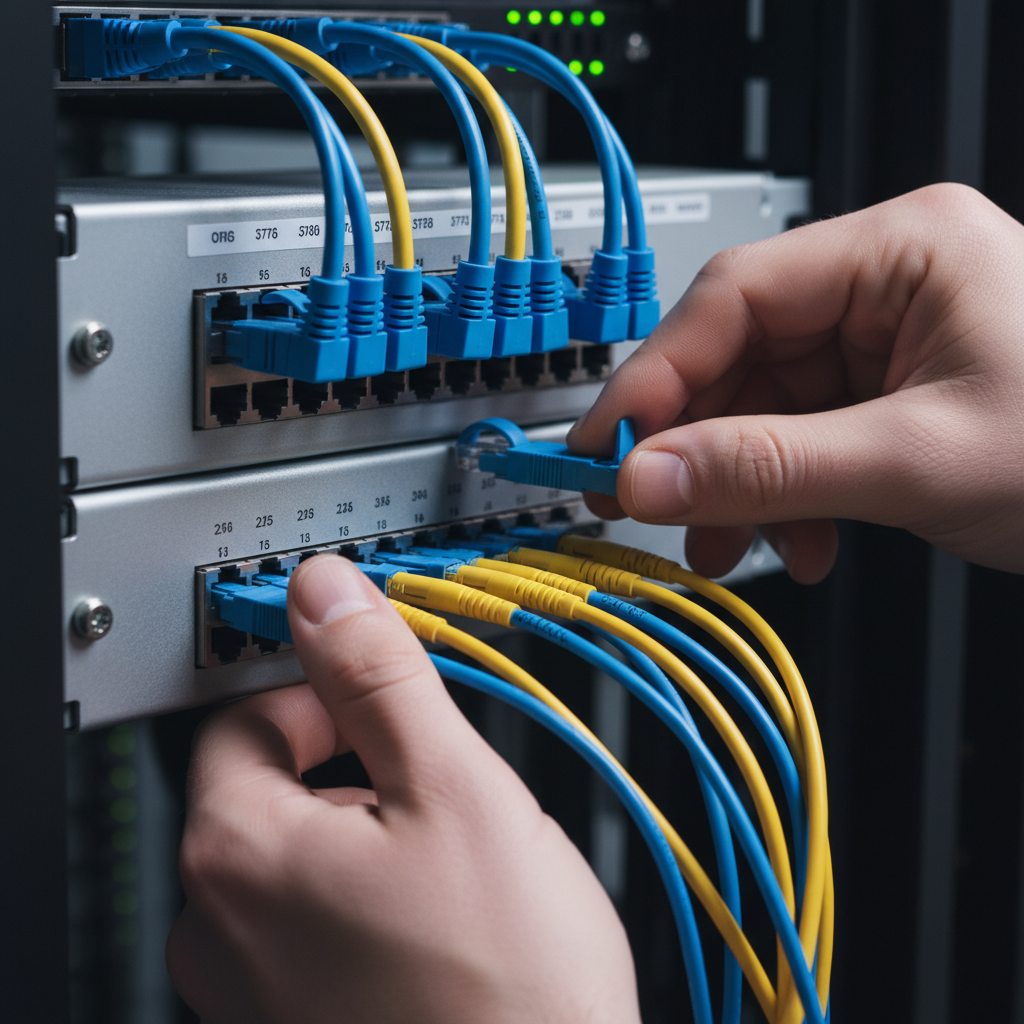
- Data wiring & structured cabling: New drops, cabinet tidy-ups, PoE planning, and fiber uplinks that reduce failure points.
- Fire and life-safety alignment: Ensure network changes respect fire alarm and critical system priorities.
Comparison: In-house vs Managed vs Co-managed
| Model | Strengths | Watch-outs | Best for |
|---|---|---|---|
| In-house IT | Immediate proximity; deep org knowledge | Limited 24/7 coverage; skill gaps in niche areas | Mature teams needing external specialists only |
| Managed IT (outsourced) | Broad expertise; round-the-clock operations | Requires clear SLAs and governance | SMEs seeking outcomes without headcount |
| Co-managed | Combines internal context with external scale | Define RACI to avoid overlap and gaps | Growing firms or seasonal operations |
Best Practices for London SMEs
Adopt clear SLAs, standardize devices, test backups quarterly, and enforce MFA everywhere. Segment networks, document changes, and align maintenance windows to trading rhythms. These practices consistently reduce incidents and speed recovery.
Here are practical habits we apply repeatedly across London projects—spanning retail floors, offices, and high-end residences where the expectation is seamless tech and zero drama.
Operational playbook
- Standardize builds: Golden images, least-privilege defaults, and self-service app catalogs reduce variability.
- Protect identities: MFA, conditional access, and periodic access reviews across all admin roles.
- Segment networks: Separate POS, guest Wi‑Fi, CCTV, and building controls onto distinct VLANs.
- Harden endpoints: Disk encryption, device compliance, and automated patch deployment.
- Practice restore drills: Validate backups by restoring sample systems and data on a schedule.
- Document everything: Runbooks, topology, and an up-to-date asset list save hours during incidents.
For an additional perspective on small-business habits, explore this overview of top IT support strategies. Use outside ideas to sanity-check your own playbook.
Local considerations for Unit 23
- Plan maintenance outside London trading peaks, especially during holiday and tourist surges, to avoid service disruption.
- Account for seasonal heat loads in network rooms; verify ventilation before summer to prevent thermal throttling.
- Coordinate smart alarms, CCTV, and building controls with network changes so security monitoring stays uninterrupted.
Tools & Resources
Use a layered toolkit: endpoint management, monitoring, secure identity, backup, and network visibility. Combine Microsoft platform capabilities with proven networking and security tools to cover endpoints, cloud, and on-prem devices.
Tooling should serve a process—not the other way around. Below is a pragmatic stack we deploy frequently, mapped to clear outcomes.
Endpoint, identity, and cloud
- Device management: Standardize builds, enforce policies, and deploy apps reliably.
- Email and collaboration security: Phishing defenses, safe links/attachments, and data-loss prevention.
- Access control: MFA and role-based permissions across SaaS and on-prem resources.
Network and security
- Network monitoring: Flow visibility, link health, and Wi‑Fi heatmaps to catch issues fast.
- Firewall & segmentation: Clean rulesets, geo controls as needed, and scheduled audits.
- Threat detection: Endpoint and network telemetry that flags suspicious behavior.
Backup and recovery
- Workstation and server protection: Daily backups with immutable copies for critical workloads.
- Restore testing: Quarterly drills with time-to-recover targets and runbooks.
If you are evaluating outside input on selection criteria, this guide on choosing an IT consulting firm offers a helpful checklist you can adapt internally.
Case Studies & Examples
Real outcomes come from joined-up delivery: networks, security, and building systems aligned. These brief examples show how integrated managed support reduces tickets, stabilizes Wi‑Fi, and keeps security systems online across London properties.
We avoid client names to protect privacy, but the technical patterns and results are typical of our portfolio.
Flagship retail: POS stability and guest Wi‑Fi
- Challenge: Intermittent POS disconnects and slow guest Wi‑Fi during weekend peaks.
- Actions: Segmented POS, prioritized traffic, tuned roaming, and upgraded PoE switches.
- Result: Ticket volume dropped sharply; weekend queues moved faster and sales staff regained confidence.
Hospitality venue: Resilient conferencing and AV
- Challenge: Meeting rooms with inconsistent video quality and mic dropouts.
- Actions: Assessed cabling, re-terminated runs, optimized AP placement, and applied QoS for conferencing.
- Result: Stable video calls; events team reported smoother turnarounds and fewer last-minute fixes.
High-end residence: Smart alarms and CCTV continuity
- Challenge: Cameras on a shared network caused congestion; alarm panel alerts weren’t consistently reaching the app.
- Actions: Isolated CCTV VLANs, verified Texecom alarm signaling, and added UPS for critical gear.
- Result: Consistent alerts; remote viewing remained responsive even during maintenance windows.
Frequently Asked Questions
These short answers address common service questions: coverage, response times, integration with existing teams, and scope. For specifics, we’ll shape SLAs around your operation’s hours, compliance needs, and technology stack.
What does a managed IT support package usually include?
Most packages cover monitoring, patching, backups, security tools, and a helpdesk with defined SLAs. Depending on your needs, add-ons can include network operations, cloud platform administration, onsite engineering, and project services like migrations or cabling upgrades.
Can you work with our in-house IT team?
Yes. Co-managed models are common. We’ll define roles so internal IT handles strategic work while we take care of monitoring, patching, and after-hours coverage. That split prevents burnout and ensures 24/7 coverage without increasing headcount.
How do you minimize disruption during maintenance?
We plan changes outside busy periods, communicate early, and test updates in a controlled group before wide release. Network segmentation and redundant links also help ensure critical services keep running while maintenance occurs in the background.
Do you support security systems like CCTV and alarms?
We integrate IT operations with CCTV, access control, and smart alarms. By segmenting traffic, maintaining power and UPS coverage, and monitoring key devices, we keep security and building systems responsive and reachable from anywhere.
Conclusion & Next Steps
Managed IT support turns ad-hoc fixes into a reliable, measurable service. With one accountable partner orchestrating networks, cloud, security, and building systems, you cut downtime and gain predictable performance—day and night.
Here’s how to proceed with confidence:
- Assess your essentials: Identify critical apps, locations, and trading windows.
- Baseline your environment: Patch status, backup success, and network maps.
- Pick your model: Outsourced or co-managed; define SLAs and escalation paths.
- Schedule onboarding: Start with discovery, hardening, and monitoring rollout.
Mid-article CTA: Want fewer tickets and faster recovery? Let’s align your networks, security, and Microsoft stack with a joined-up plan. Contact Concepto Solutions to schedule a discovery call.
For risk planning ideas, you may also review a general overview of IT risk management strategies and adapt relevant concepts to your governance model.